
How to Form Concrete Steps: Step by Step Guide
As an Amazon Associate, I earn from qualifying purchases.
Concrete steps are unforgiving—if the forms are off, every tread and riser will show it. This step‑by‑step guide walks you through how to set concrete forms for steps the right way, from layout and string lines to staking, bracing, and final checks before the pour. Whether you’re forming a small porch or a full set of entry steps, these are the same basics I use on real jobs so your forms stay straight, solid, and ready for concrete.
Related Guides
- Concrete Forms (Basics) Learn the fundamentals of form setup, materials, and layout before you start building step forms.
- Start Here: Concrete Tools & Guides – Your main resource hub for tools, materials, and techniques used in every repair project.
- How to Pour Concrete -The Step to Step Guide
Construction Math Calculators
- Concrete Yardage Calculator – how much concrete you need
- Slope Calculator (Rise, Run & Percent Grade)
- Hypotenuse Calculator (Right Triangle Calculator)
Tools & Materials You’ll Need
Tools
Tape measure
Carpenter’s pencil
Level (2‑ft and 4‑ft are ideal)
String line + line level
Hammer or impact driver
Circular saw or miter saw (for cutting form boards)
Speed square
Shovel
Tamper (hand tamper is fine)
Materials
2×6 or 2×8 lumber for side forms
2×4 lumber for risers
Wooden or metal stakes
Exterior‑grade screws
Form oil or release agent
Gravel base (if needed)
Rebar or wire mesh (depending on local code and step size)
Before You Start: Prep & Layout
Getting your layout right is the difference between steps that feel solid and professional… and steps that look crooked forever. Before you start building forms, take a few minutes to measure, plan, and set your reference lines.
1. Measure the Total Rise
Measure from the lower grade to the top landing. This tells you how many steps you need and how tall each riser will be.
2. Calculate Riser Height & Tread Depth
Use simple math:
Most steps fall between 6″–7 ½” risers
Treads are usually 10″–12″ deep
Adjust your numbers so every step is identical.
3. Check Local Code (Optional but Smart)
Some areas have limits on maximum riser height or minimum tread depth. A quick check avoids redoing work later.
4. Mark the Footprint
Use a tape measure and spray paint to outline:
The width of the steps
The depth of each tread
The landing area
This gives you a visual starting point.
5. Set String Lines
Run string lines for:
The top of each riser
The front edge of each tread
The overall width
These lines keep everything straight and square as you build the forms.
6. Compact the Base
If the ground is soft or disturbed:
Add a few inches of gravel
Compact it with a hand tamper
A solid base keeps your forms from shifting.
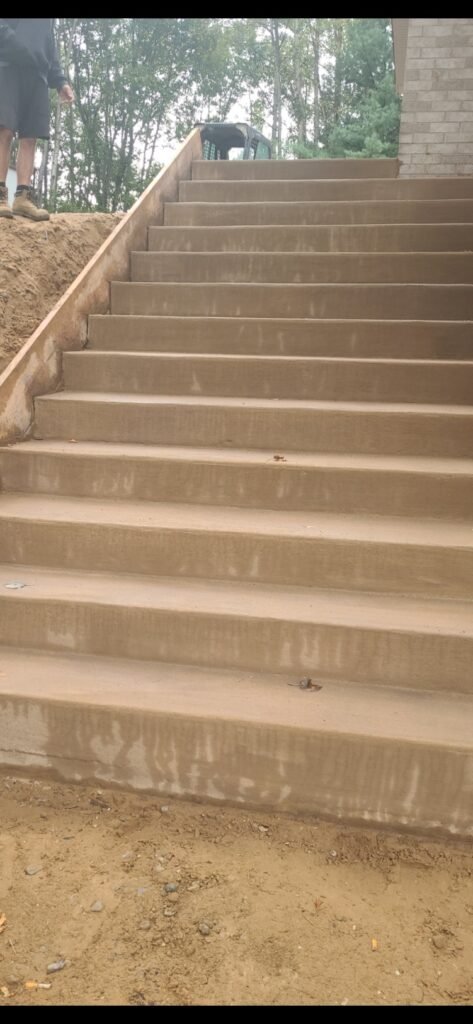
Step 1: Plan your steps
Figure out how many steps you need by dividing the total rise by your target riser height (usually 6″–7 ½”). Adjust until every riser is the same height and every tread is the same depth.
Step 2: Mark the footprint
Use a tape measure and spray paint or a pencil to mark:
The width of the steps
The depth of each tread
The landing at the top
This gives you a clear outline to work inside.
Step 3: Set your string lines
Run string lines for:
The top of each riser
The front edge of each tread
The overall width of the steps
These strings are your reference—forms should follow the strings, not the ground.
Step 4: Build and set the side forms
Cut 2×6 or 2×8 boards to match the profile of the steps (the side view). Set one side form first, stake it solid, then set the opposite side to match your string lines and measurements.
Step 5: Install the riser boards
Starting at the bottom:
Cut 2x4s for each riser
Screw them into the side forms at your layout marks
Make sure each riser is level and matches your tread depth
Use a scrap 2×4 as a spacer to keep tread depth consistent.
Step 6: Brace everything solid
Add stakes and kickers:
Behind the side forms
At the bottom riser
Anywhere the forms want to bow
You should be able to push on the forms without seeing movement.
Step 7: Double‑check level, square, and measurements
Before you ever think about concrete:
Check each tread with a level
Measure each riser height
Measure corner to corner to keep things square
If something is off, now is the time to fix it – Pro tip set your forms high that way you can just hammer the stakes down to grade.
Step 8: Add rebar or reinforcement (if needed)
Depending on local code and step size:
Place rebar or wire mesh in the thicker parts of the steps
Keep steel up off the ground with small blocks or chairs
Step 9: Apply form oil and final cleanup
Brush or spray form oil on the inside of the forms so they release cleanly later. Remove loose dirt, rocks, and debris from inside the forms so the concrete fills clean and solid.
Uneven risers
Even a small height difference makes steps feel off. Measure every riser from the same reference point.
Inconsistent tread depth
Use a spacer board so every tread matches your layout.
Weak bracing
If the forms move during the pour, the steps will show it. Brace the sides and bottom riser solid.
Building to the ground, not the string lines
The ground is never level. Always follow your string lines.
Skipping form oil
Makes removal harder and can chip edges.
Poor base prep
Soft ground lets forms shift. Compact the base before building.
Not checking square
Measure corner‑to‑corner so the steps line up with the landing.
Final Thoughts on Concrete Repair
Forming concrete steps isn’t complicated, but it does demand accuracy. When your layout is right, your string lines are tight, and your forms are braced solid, the pour goes smoother and the finished steps look clean and professional. Take your time on the setup, double‑check your measurements, and don’t rush past the basics. Good forms make good concrete.