
Concrete Cleaning and Maintenance Guide
As an Amazon Associate, I earn from qualifying purchases.
Concrete lasts longer and looks better when it’s cleaned and maintained the right way. This guide walks you through the simple steps to keep your driveway, patio, garage floor, or basement slab in good shape—how to clean it, what to look for during yearly inspections, and when it’s time to repair or seal the surface.
Related Guides
- Concrete Repair Hub – Step‑by‑step guides for fixing cracks, spalling, pits, and damaged concrete.
- Sealers & Coatings Hub – Overview of all sealer types and coatings, and where to use each one.
- Start Here: Concrete Tools & Guides – Your main resource hub for every project
Why Cleaning Your Concrete Matters
Your concrete is a real investment—just like your home, your tools, or your truck. You wouldn’t let your car go without a wash, so why ignore the surface that supports everything around your property? Regular cleaning keeps concrete looking good, prevents long‑term damage, and protects the money you’ve already put into your driveway, patio, or garage floor.
Tools & Products
Keeping concrete clean and in good shape doesn’t require a full contractor setup—just a few reliable tools and products that make the job easier and help you spot problems early.
Pressure Washer – The fastest way to remove dirt, algae, and surface grime from driveways and patios. simple 2500 psi like this Westinghouse will do, be careful with high power pressure washers as they can damage the surface.
Surface Cleaner Attachment – (optional) allows you to be more consistant, clean fasterthan using a wand alone
Concrete Cleaner or Degreaser – Breaks down oil, grease, and tough stains so the surface is ready for sealing or inspection.
Stiff-Bristle Scrub Brush – Ideal for spot cleaning and working cleaner into textured concrete.
Pump Sprayer – Helps apply cleaners evenly across large areas without wasting product. or a soap attachment for your power washer. Chapin pump sprayers are the best in business.
Leaf Blower or Broom – Clears debris before washing or sealing.
Safety Gear – Gloves, eye protection, and non-slip footwear for wet surfaces.
Step by Step Guide to Cleaning Concrete
1. Clear the Surface – Remove anything sitting on the concrete so you can clean edge‑to‑edge.
Move vehicles, furniture, grills, and planters
Sweep or blow off loose dirt, leaves, and debris
A clean starting point helps your cleaner work deeper.
2. Pre‑Treat Stains – Spot‑clean the areas that need extra attention.
Apply a concrete cleaner or degreaser directly to oil, grease, rust, or algae
Let it sit for 5–10 minutes
Scrub with a stiff‑bristle brush
This breaks down the heavy stuff before you wash the whole slab.
3. Mix or Apply Your Cleaner – Use a pump sprayer or pour‑and‑scrub method depending on the product.
Mix according to the label
Apply evenly across the surface
Let it dwell long enough to loosen dirt (usually 5–15 minutes)
Don’t let the cleaner dry—keep it damp if needed.
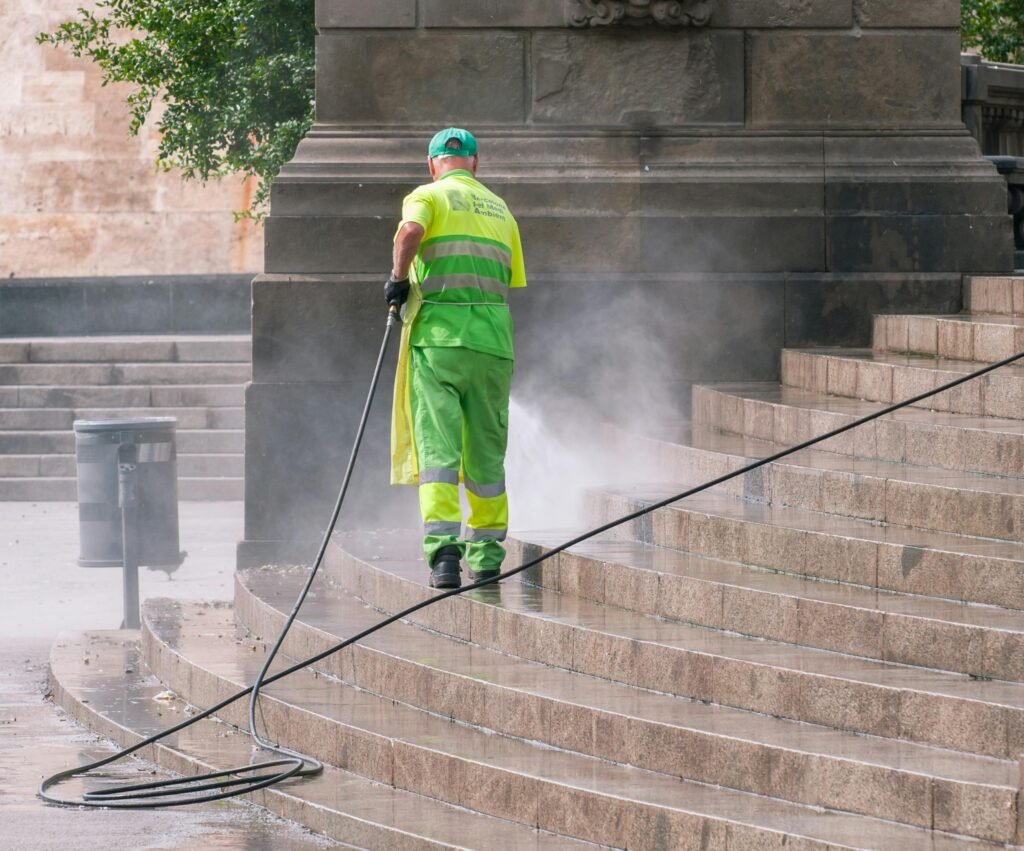
4. Pressure Wash the Surface – This is where the real cleaning happens.
Use a pressure washer in the 2500–3000 PSI range
Keep the wand 8–12 inches from the surface
Work in smooth, overlapping passes
Using a Surface Cleaner Attachment
If you have one, this is the time to use it. It cleans faster, prevents streaks, and gives a professional finish.
5. Rinse Thoroughly – Rinse from the highest point to the lowest so dirty water flows off the slab.
Flush all cleaner residue
Rinse edges, joints, and corners
Make sure no soap or debris is left behind
A clean rinse is important if you plan to seal afterward.
6. Inspect the Concrete While It’s Wet – Water makes damage easier to see. Look for:
Cracks
Spalling or flaking
Pitting
Low spots holding water
Dont hold out of fixing cracks and damage on your concrete as they can lead to bigger damage if not addressed properly. Lucky for you I made a comprehensive guide to teach you everything you need to know about the matter.
See our Concrete Repair Guides to fix cracks, spalling, or worn surfaces.
7. Let the Concrete Dry Completely – Dry time depends on weather:
Sun + warm temps: 24 hours
Shade or cool temps: 48–72 hours
If you plan to seal the concrete, it must be fully dry.
8. Seal or Protect the Surface (Optional but Recommended) – Once clean and dry, sealing keeps it looking good longer.
Use penetrating sealer for driveways, patios, and outdoor slabs
Use acrylic for decorative or indoor surfaces
Use epoxy or polyaspartic for garages and shop floors
If your taking the time to clean your concrete im guessing you might want to seal while your at it
Learn more in our Concrete Sealers & Coatings Guide.
9. Set a Simple Maintenance Schedule – Concrete stays in great shape with light routine care.
Sweep monthly
Wash seasonally
Inspect yearly
Reseal every 2–5 years depending on the product
Final Thoughts on Cleaning Concrete
Keeping your concrete clean isn’t complicated, but it makes a huge difference in how long your driveway, patio, garage floor, or walkway will last. A simple routine—wash it, inspect it, and protect it—helps you catch small problems early and keeps the surface looking sharp year‑round. Once the slab is clean, it’s the perfect time to repair any cracks or damage and apply a sealer that protects your investment for the long haul. A little maintenance now saves you from bigger repairs later and keeps your concrete performing the way it should.